LED Downlight Manufacturer for Residential & Commercial Projects
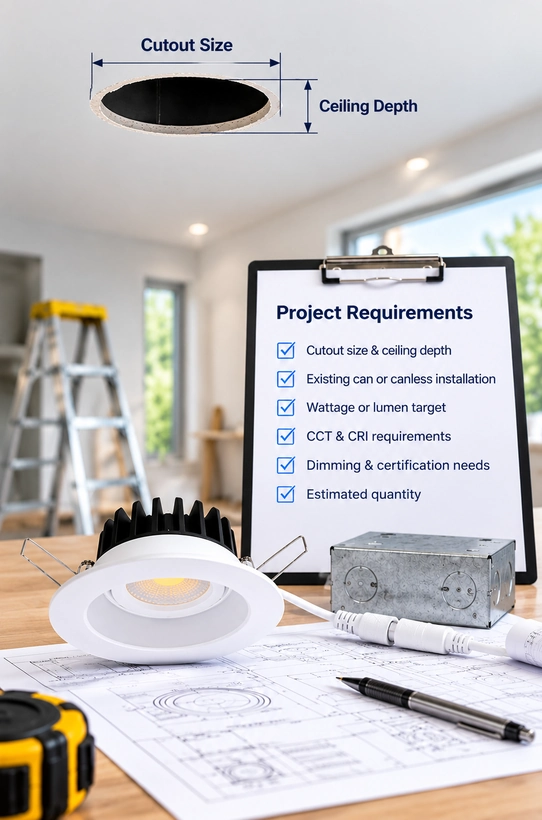
Supplying lighting distributors, contractors, and developers. When specifying downlights for apartments, hotels, or commercial interiors, wattage is only the beginning. We help you align cutout dimensions, ceiling depth, CCT, lumen output, and installation types for seamless project execution.
Have a target cutout, wattage or existing sample? Send it with your inquiry.
Explore Our LED Downlight Range
Engineered for specific ceiling conditions, optical requirements, and installation methods across B2B projects.
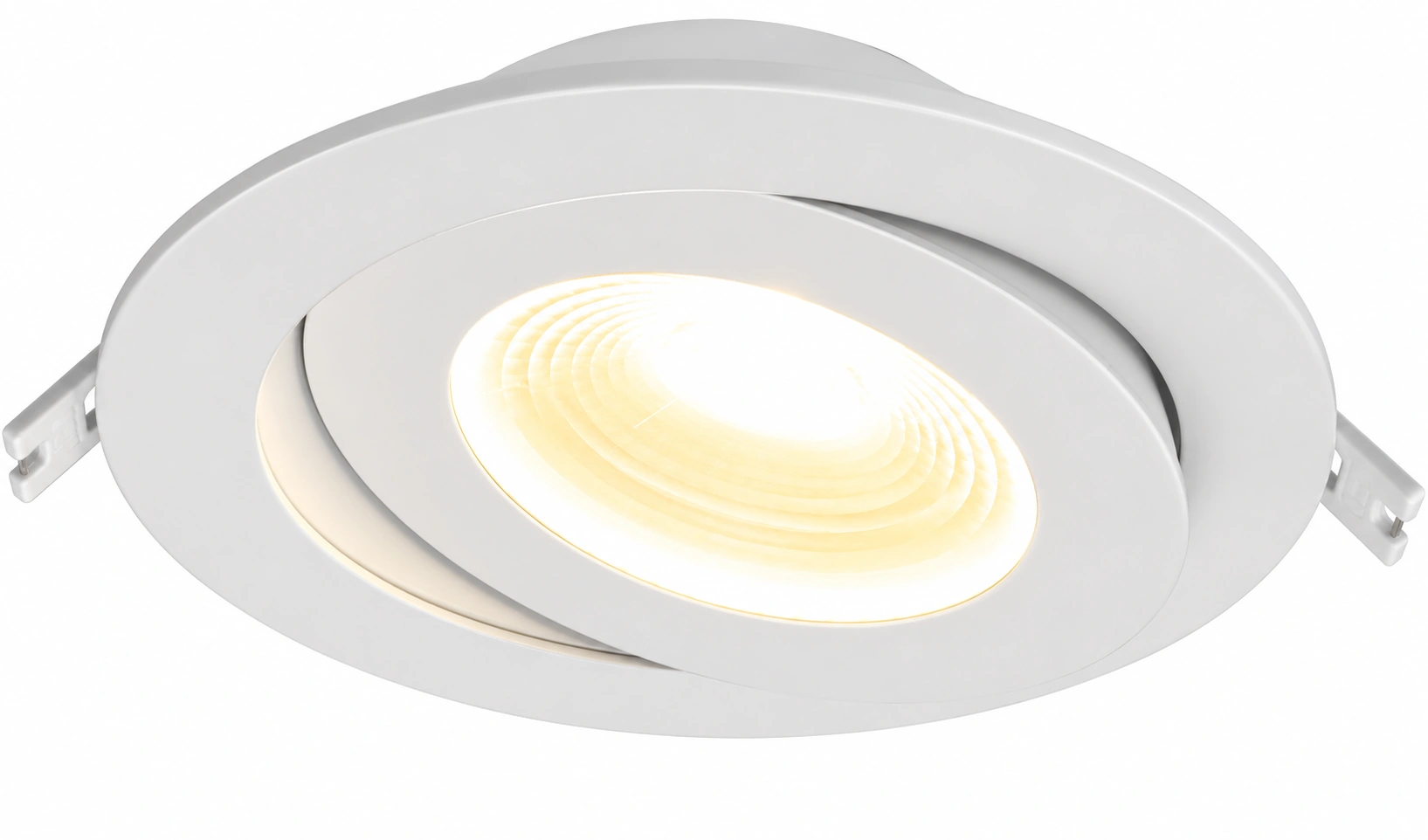
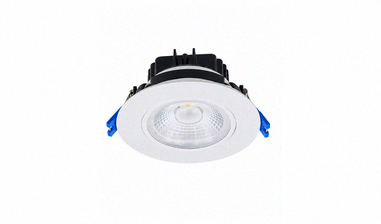
Adjustable LED Downlight
Scenario: Retail displays, artwork, hotel lobbies, and architectural accent lighting.
Constraint: A fixed downlight only sends the beam vertically downward, failing to highlight wall features.
Solution: Adjustable gimbal constructions combined with COB optics on selected models.
Value: Installers can redirect the beam post-installation without relocating the ceiling opening.
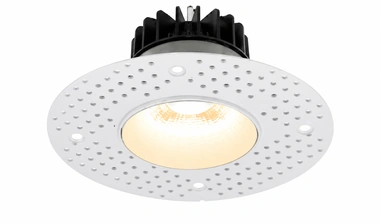
COB Downlight
Scenario: High-end commercial spaces requiring precise beam control and low glare.
Constraint: Standard SMD panels can create a wide, uncontrolled flood of light with visible hotspots.
Solution: Chip-on-Board (COB) optical constructions paired with deep reflectors on applicable models.
Value: Provides a more controlled beam distribution and reduces direct glare for a comfortable visual environment.
Canless LED Downlight
Scenario: New construction or remodels with shallow ceiling plenums.
Constraint: Ceiling joists or HVAC ducts interfere with traditional deep recessed cans.
Solution: Low-profile construction (approx. 0.45-inch body on selected models) with a separate junction box.
Value: Installs directly into the drywall cutout without requiring a bulky housing, saving ceiling space.
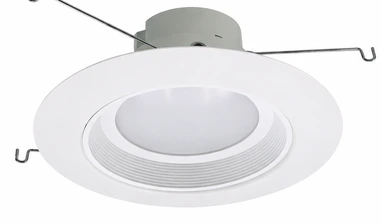
Retrofit LED Downlight
Scenario: Upgrading existing residential or commercial spaces to LED.
Constraint: The ceiling already has recessed cans installed, and removing them would require drywall repair.
Solution: Designed to fit into compatible existing housings (connection method depends on model).
Value: Allows for rapid upgrades without ceiling damage, utilizing the existing infrastructure.
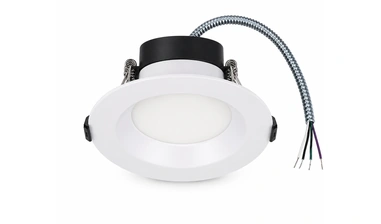
Wattage Selectable Downlight
Scenario: Multi-area projects or distribution stocking programs.
Constraint: Different rooms require different lumen packages, forcing distributors to stock multiple fixed-wattage SKUs.
Solution: Integrated switches allowing field-adjustable wattage settings on applicable models.
Value: Reduces inventory complexity and allows contractors to adjust brightness on-site to meet specific room requirements.
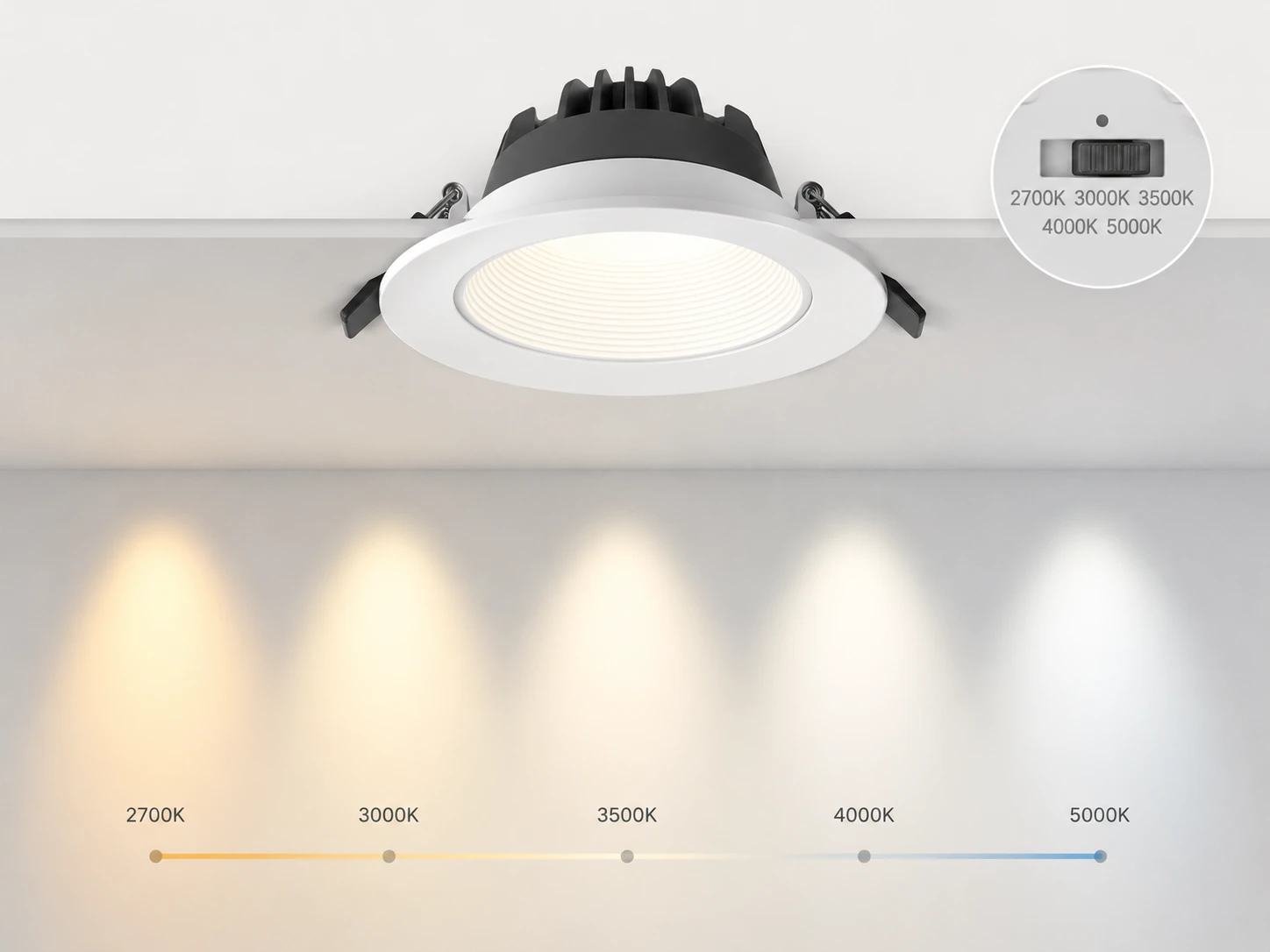
Stop Turning Every CCT Into Another SKU
For a lighting distributor servicing apartment, hotel, and residential projects, managing inventory is a constant challenge. A bedroom might require 2700K, a living area 3000K, a kitchen 3500K, and a utility space 4000K.
If you rely entirely on fixed-CCT fixtures, a single downlight housing platform suddenly turns into five distinct inventory positions. The distributor does not want five cartons of the same housing only because the CCT is different.
LIBO’s selectable-CCT downlights (available in 1, 3, or 5 CCT configurations on applicable models, spanning 2700K–5000K) allow the installer to choose the color temperature during installation. When combined with Wattage Selectable Downlight options, one configurable platform covers significantly more rooms and projects, helping reduce fixed-SKU variations and accommodating late-stage architectural changes.
A High Lumen Number Does Not Guarantee a Comfortable Ceiling
A product sample might look perfectly bright sitting on a desk. But the buyer needs to know how twelve fixtures will look across a hotel corridor, office, or residential ceiling.
In real projects, poor optical design leads to visible hotspots, harsh direct light, abrupt beam edges, and uncomfortable viewing angles. High lumens without optical control simply means more glare.
LIBO addresses this through specific optical structures depending on the model: edge-lit designs for a more uniform illuminated surface, regressed back-lit constructions to hide the light source, and COB reflectors for a controlled beam. These structures help reduce direct glare, create smoother beam transitions, and minimize the appearance of visible LED points.
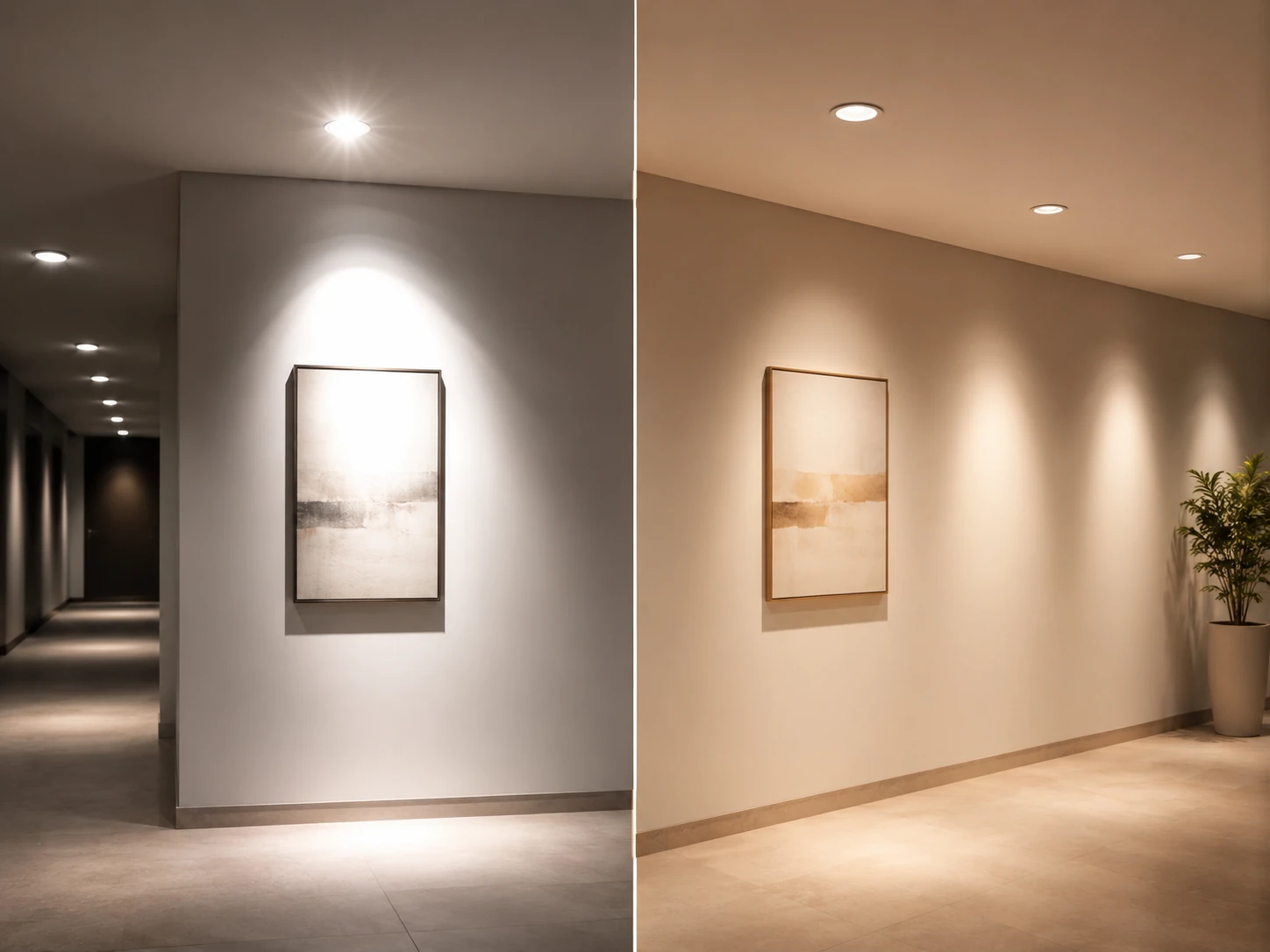
Visual representation: Controlled beam distribution vs. unshielded direct brightness.
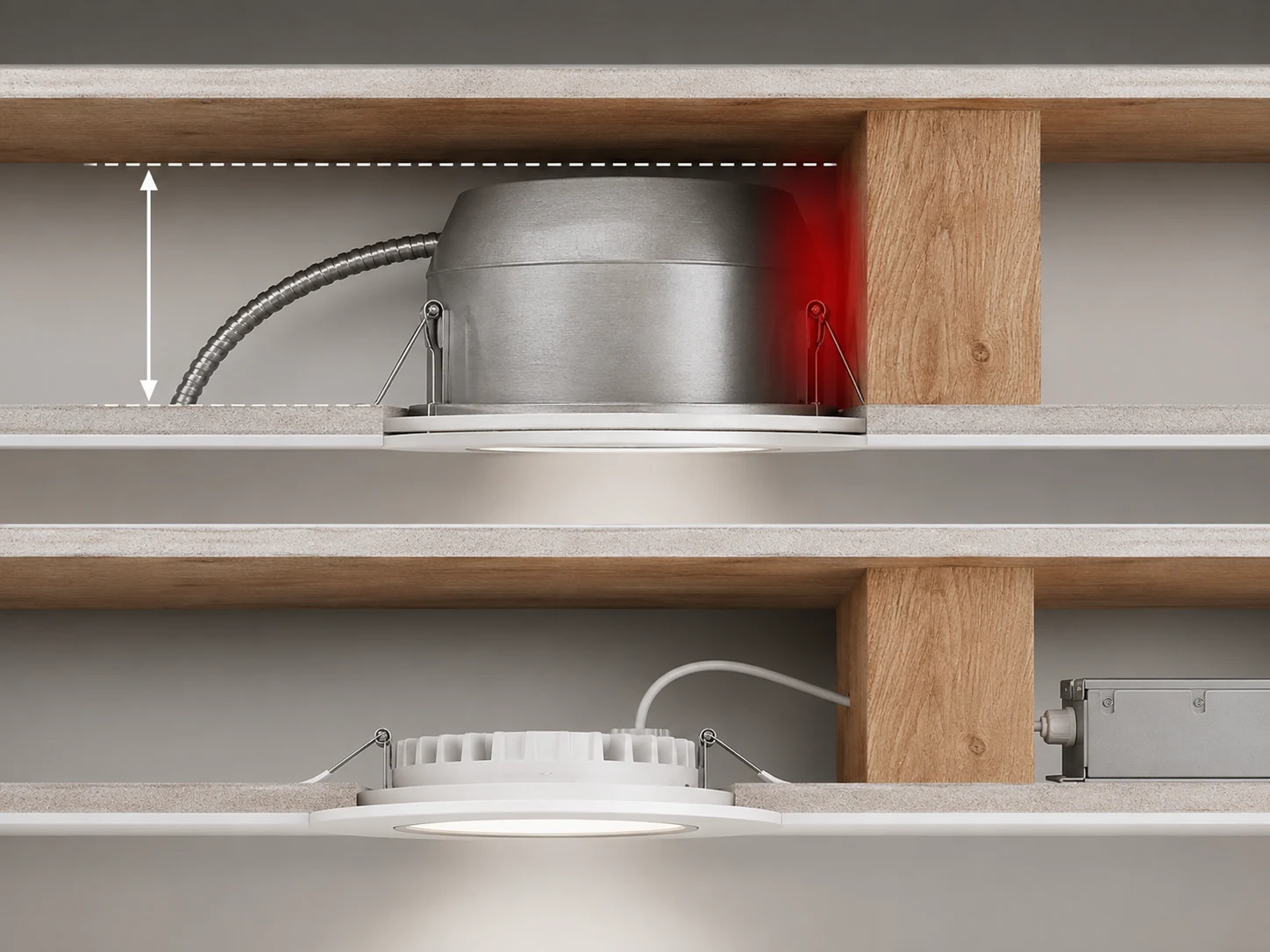
The Installation Problem Usually Appears After the Ceiling Is Already There
Contractors know the reality: the ceiling cavity is too shallow, a joist sits right next to the planned fixture location, or the existing recessed can is not compatible with the new trim.
Do not select a downlight only by nominal diameter. A nominal 4-inch or 6-inch size does not necessarily equal the actual cutout requirement.
When a renovation contractor finds a ceiling joist beside the planned cutout, a deep recessed housing can force the light position to move. Selected LIBO canless downlights use an approximately 0.45-inch low-profile fixture body combined with a separate junction box (featuring an integrated dimmable driver on applicable models). This reduces the depth required directly above the ceiling opening, allowing the fixture to sit flush even in constrained spaces.
Canless or Retrofit LED Downlight?
Choosing the right structure depends entirely on what is already inside the ceiling.
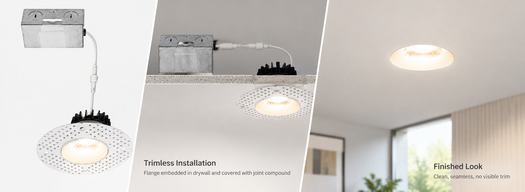
Canless LED Downlight
- Requires no traditional recessed can housing.
- Installation is cutout-based directly into the drywall.
- Utilizes a separate J-box / driver arrangement (depending on model).
- Highly useful for finished ceilings, remodels, or shallow cavities.
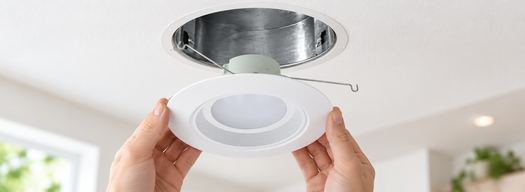
Retrofit LED Downlight
- Works with compatible existing recessed cans.
- Existing housing compatibility matters heavily.
- Connection method and compatible housing size depend on the selected retrofit model.
- Useful when the ceiling already has recessed housings that need upgrading.
Project Applications
Where consistency, compatibility, and batch appearance matter most.
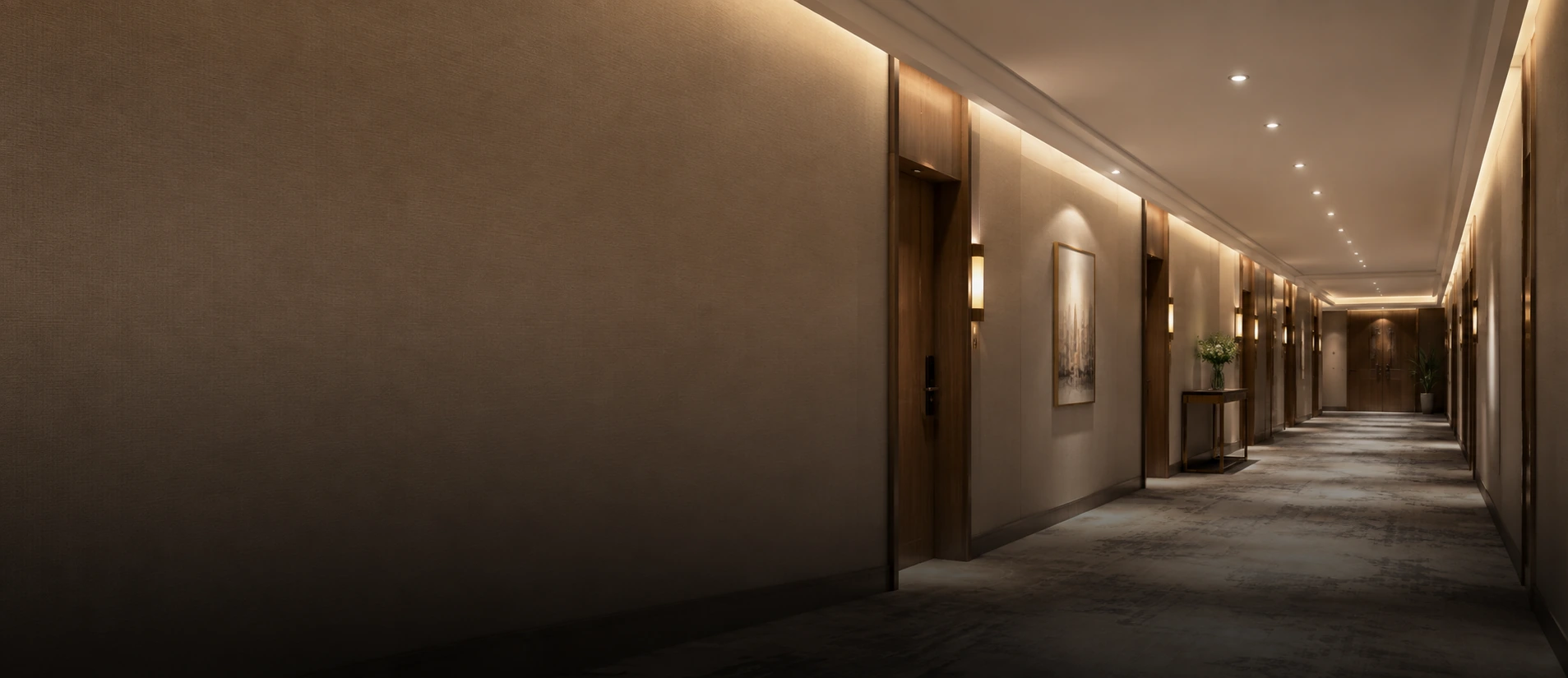
Hotels & Apartments
A single hotel corridor may use dozens of downlights in the same field of view. CCT consistency, cutout uniformity, and batch appearance are far more critical than single-fixture brightness.
Explore Commercial Lighting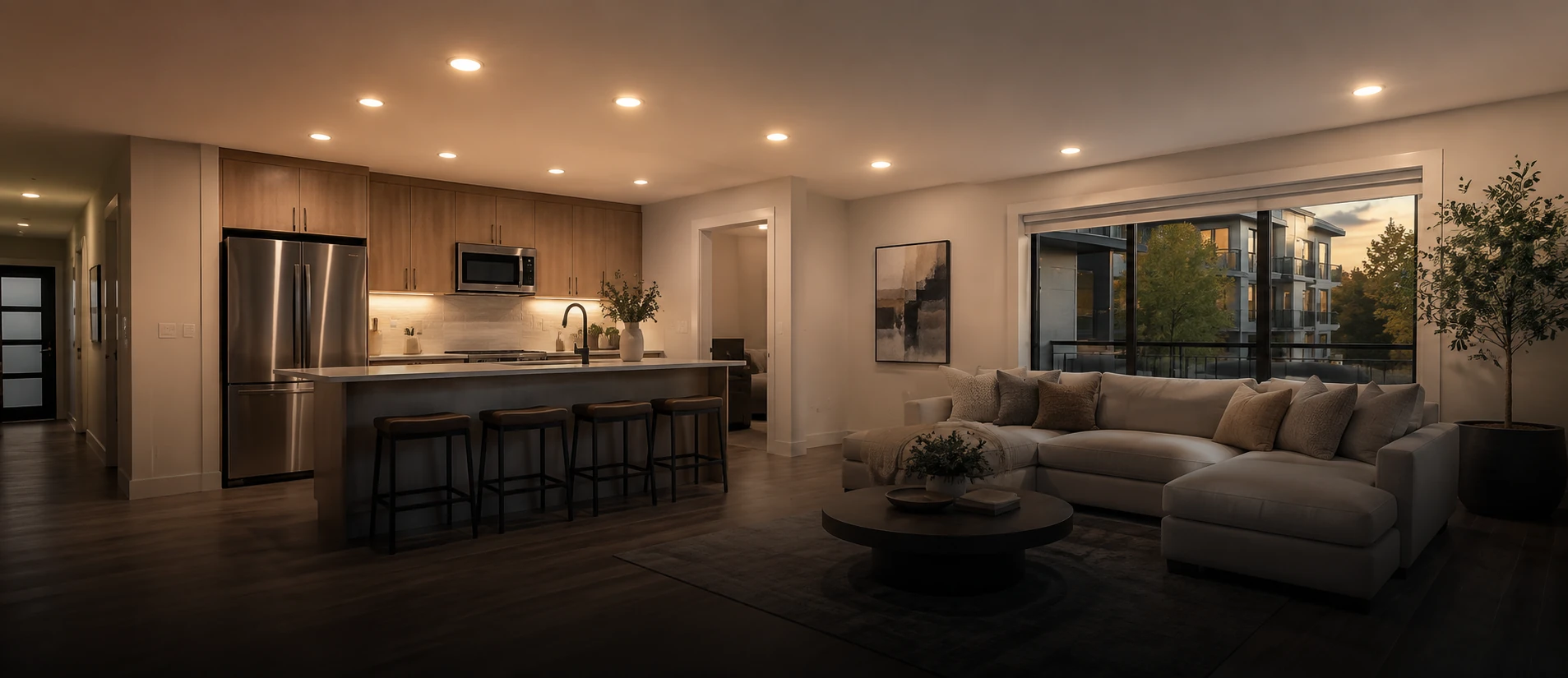
Residential Development
Builders need quick installation and the ability to adjust CCTs based on the room—warm in bedrooms, cool in kitchens—without stocking entirely different fixtures.
Explore Residential Lighting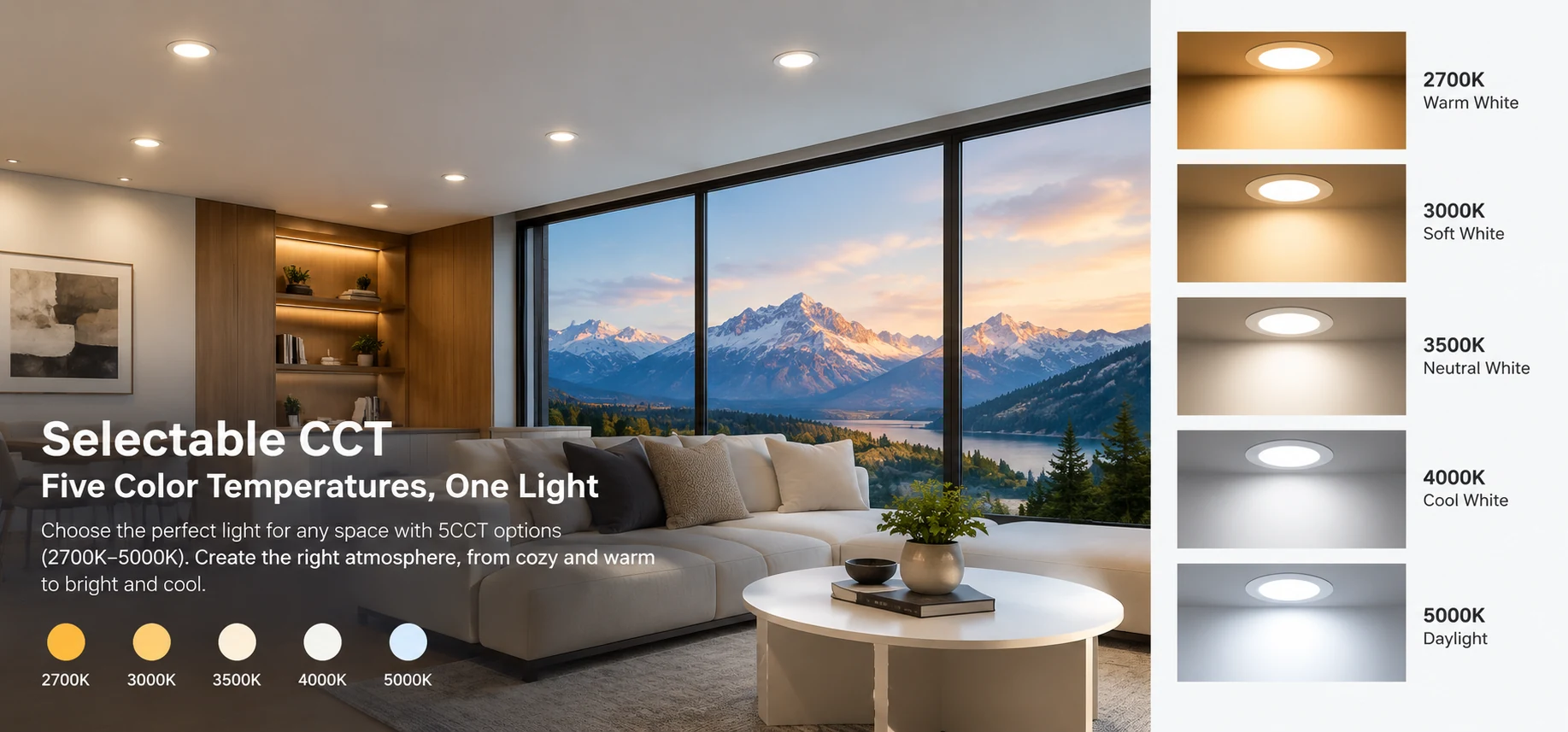
Retail & Display
Requires high CRI (90+ on selected models) to render merchandise accurately, often utilizing adjustable gimbal designs to direct the beam onto specific displays.
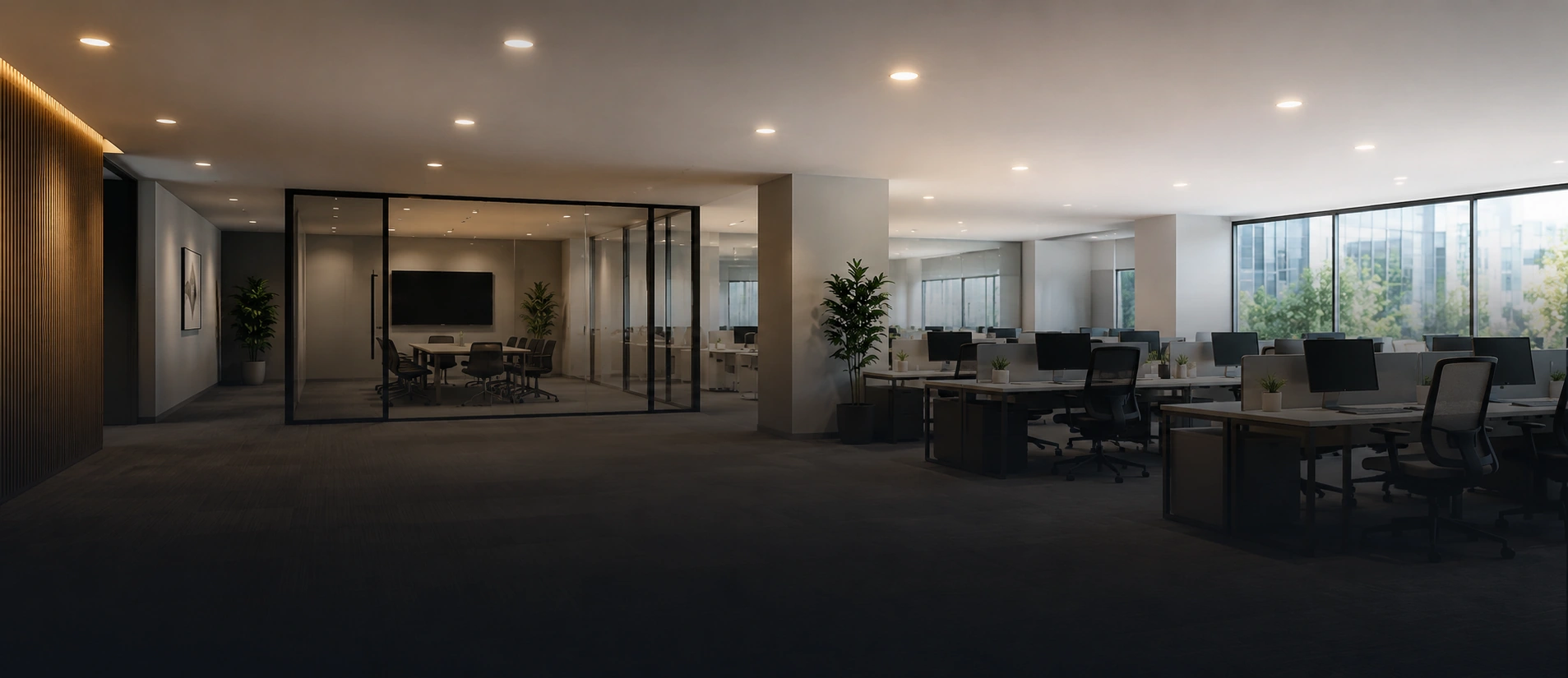
Office & Light Commercial
Focuses on low-glare optical structures like regressed back-lit designs to ensure comfortable viewing angles for employees working under the lights all day.
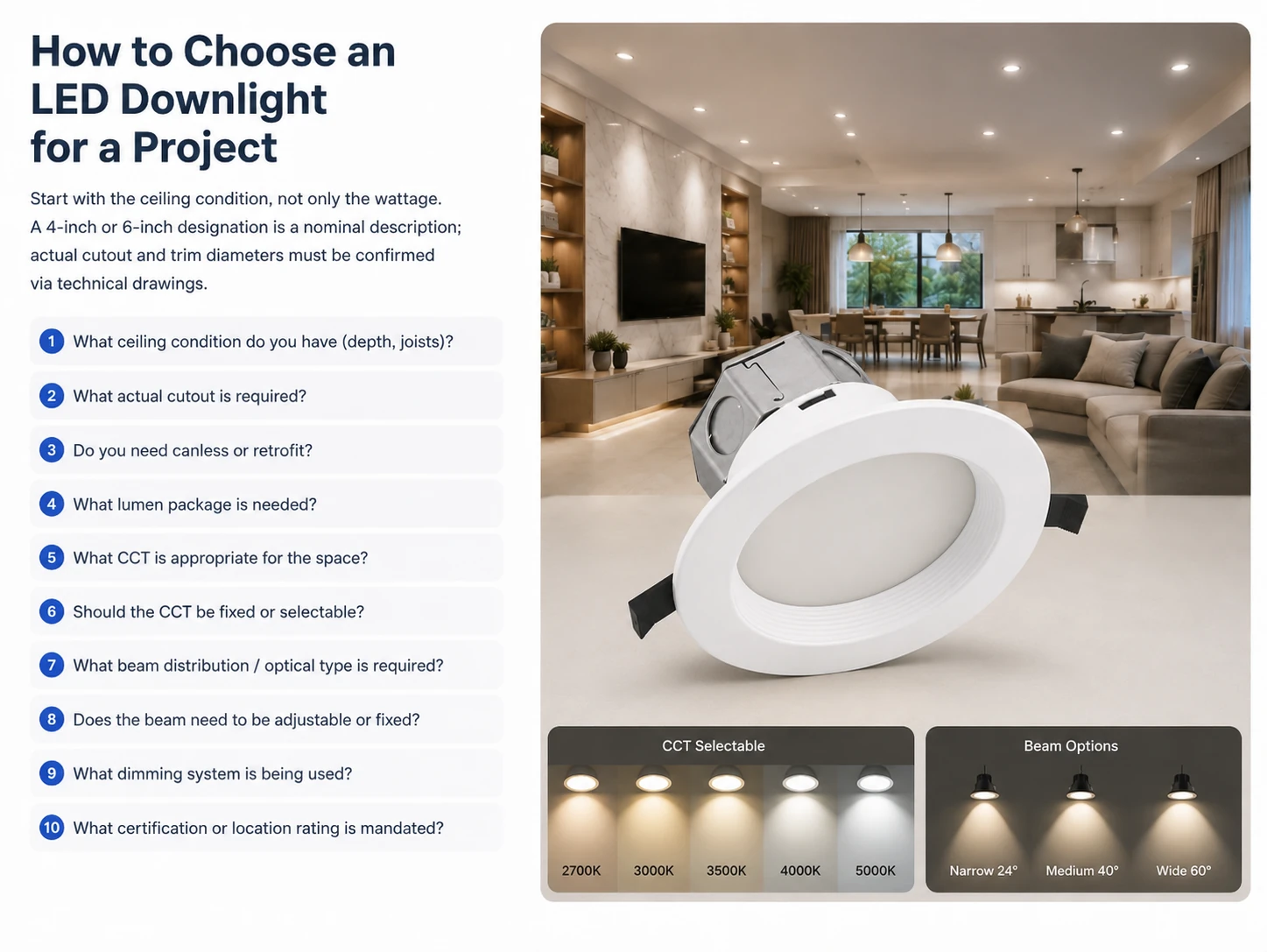
How to Choose an LED Downlight for a Project
Start with the ceiling condition, not only the wattage. A 4-inch or 6-inch designation is a nominal description; actual cutout and trim diameters must be confirmed via technical drawings.
- What ceiling condition do you have (depth, joists)?
- What actual cutout is required?
- Do you need canless or retrofit?
- What lumen package is needed?
- What CCT is appropriate for the space?
- Should the CCT be fixed or selectable?
- What beam distribution / optical type is required?
- Does the beam need to be adjustable or fixed?
- What dimming system is being used?
- What certification or location rating is mandated?
B2B Specification Overview
General capabilities across the LIBO LED Downlight range. Specifics must be confirmed against the exact model.
| Specification | Details |
|---|---|
| Product Types | Canless, Retrofit, COB, Adjustable, Selectable |
| Input Voltage | Confirm with exact model |
| Wattage | Selected canless models cover approx. 8W–20W |
| Lumens | Selected models cover approx. 500–1400 lm |
| CCT | Selectable (1/3/5 config) or Fixed (2700K–5000K range on selected models) |
| CRI | 90+ on selected models |
| Cutout & Overall Size | Project specific / By Model |
| Fixture Depth | Approx. 0.45-inch on selected low-profile models |
| Dimming | Integrated dimmable driver on applicable models |
| IC / Wet / Damp Rating | Available on selected models |
| Certification | ETL / FCC on applicable models |
Give Installers the Dimensions Before They Reach the Ceiling
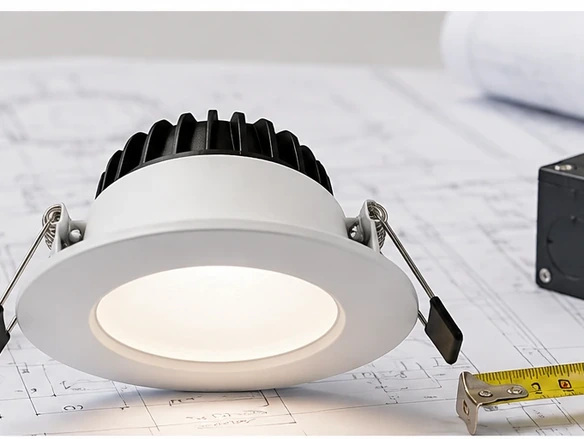
The construction team needs accurate dimensions before the drywall work is finished. Providing dimensions too late results in re-cutting ceiling openings, fixtures not sitting flush, and wiring conflicts.
We provide comprehensive technical support for our products, including cutout drawings, overall dimensions, fixture depth, mounting methods (such as spring clip arrangements), and wiring/J-box positions.
Ensure your job-site avoids rework by confirming the CCT switch position and installation sequence before the first hole is cut.
Test the Failure Mode That Creates Field Returns
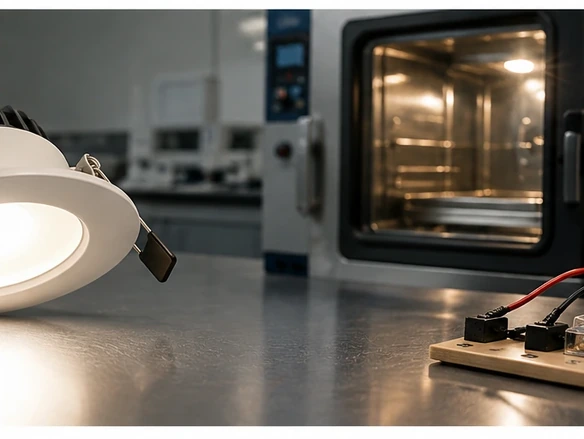
A downlight lighting up on a desk for five minutes does not prove reliability. True B2B quality is validated through testing the conditions that cause long-term operation failures.
Depending on the project and model, sample approval can include review of Photometric tests, CCT/CRI consistency, Temperature Rise on the driver, Surge resistance, Hi-Pot safety, Dimming stability, and Flicker performance.
Test information can be reviewed for the applicable model or project to ensure batch stability before mass production.
When the Existing Downlight Is Close—but the Project Specification Is Different
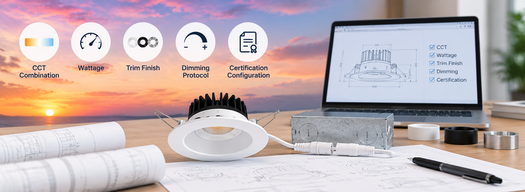
Often, a buyer likes an existing housing but the purchasing team or engineering needs to change the CCT combination, wattage, trim finish, dimming protocol, or certification configuration.
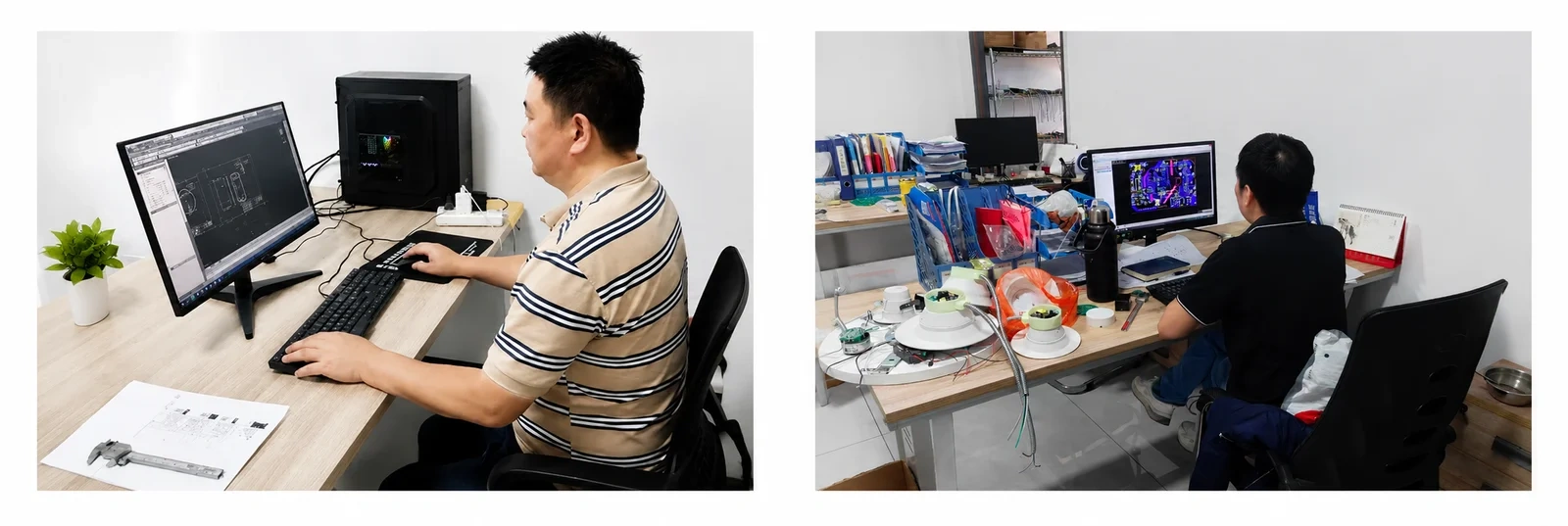
LIBO supports OEM and project development through drawing review, sample development, sample approval, electrical/mechanical testing, and final mass production specification confirmation.
Submit your exact requirements below, and our engineering team will evaluate the feasibility.
Send Your Project Specification
Verify More Than the Product Sample
A successful project requires confidence in both the product configuration and the manufacturing facility.
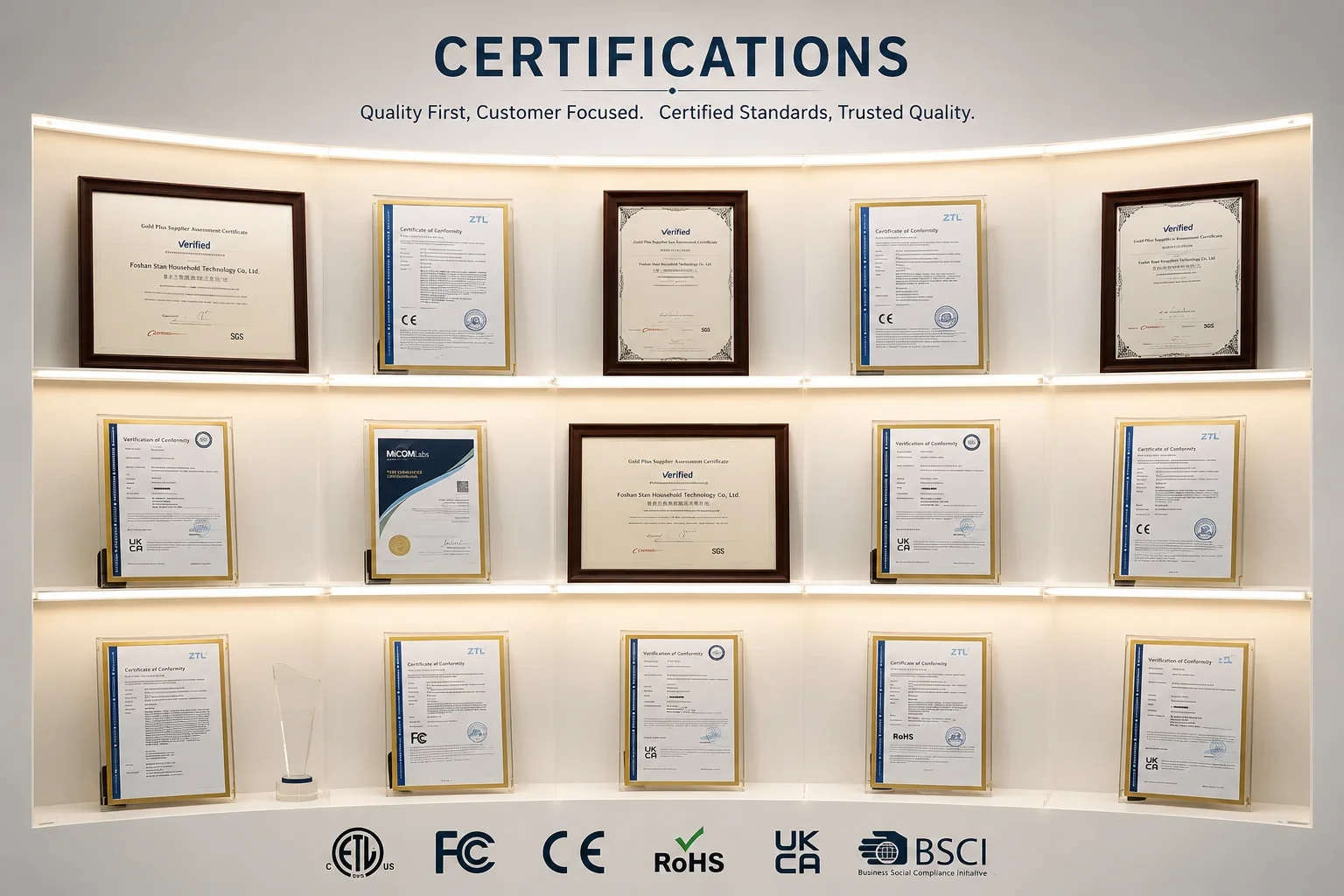
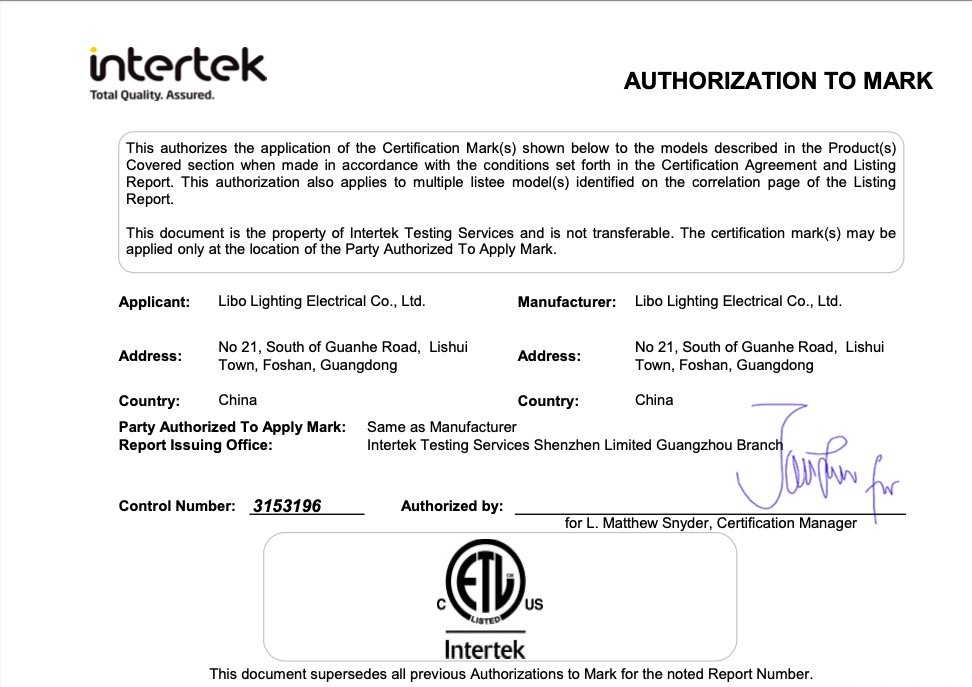
For product-level compliance, ETL and FCC documentation is available for applicable models and configurations. Certification should always be confirmed against the exact model being specified.
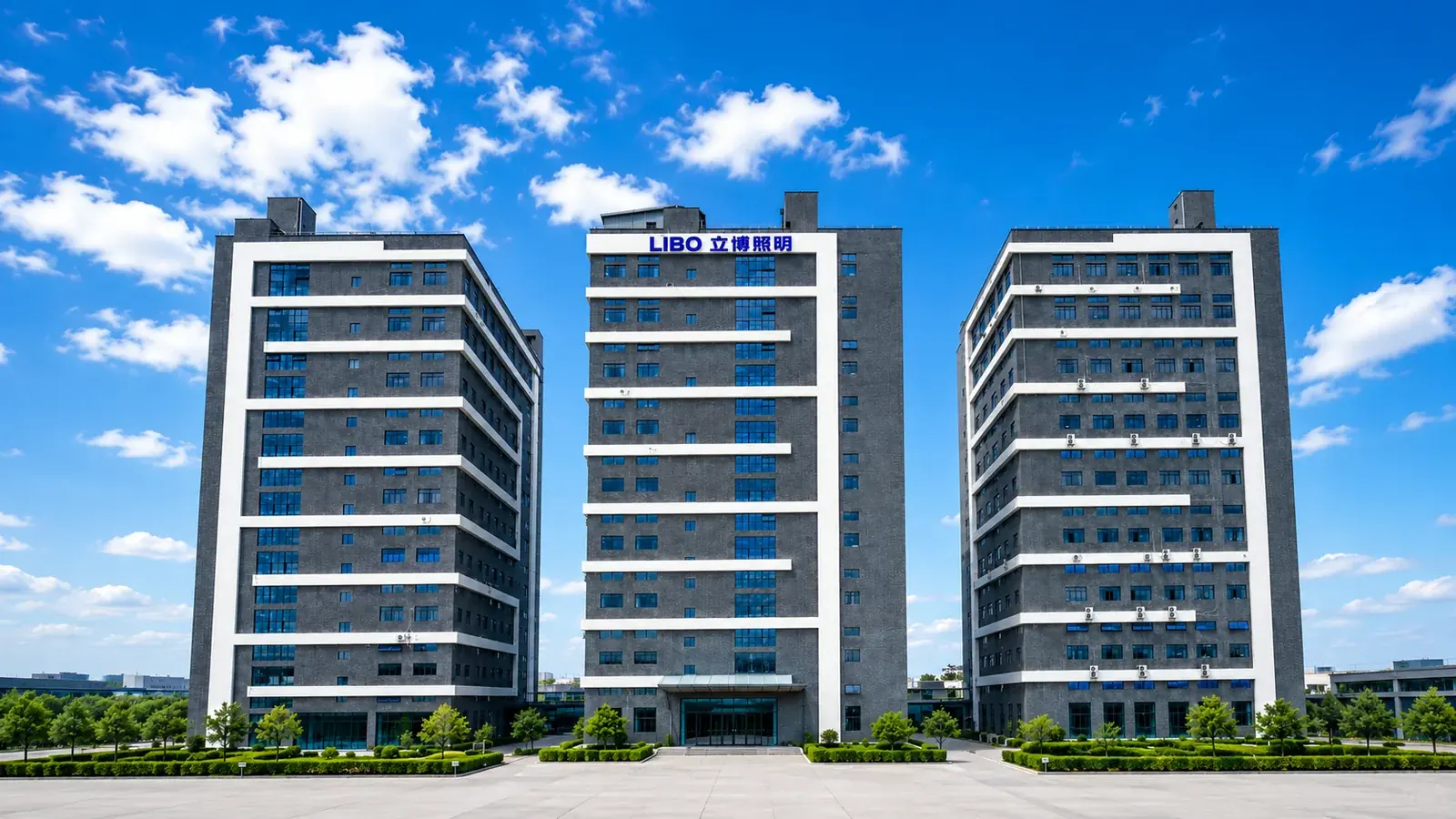
For factory-level reliability, LIBO operates under ISO and BSCI documentation, demonstrating our commitment to quality management and responsible production processes.
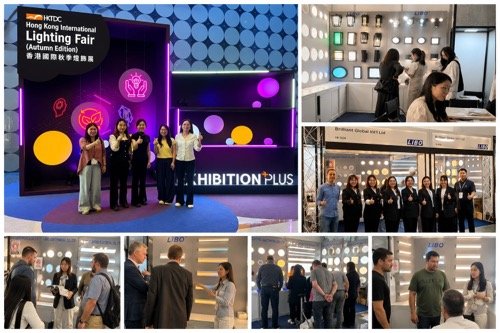
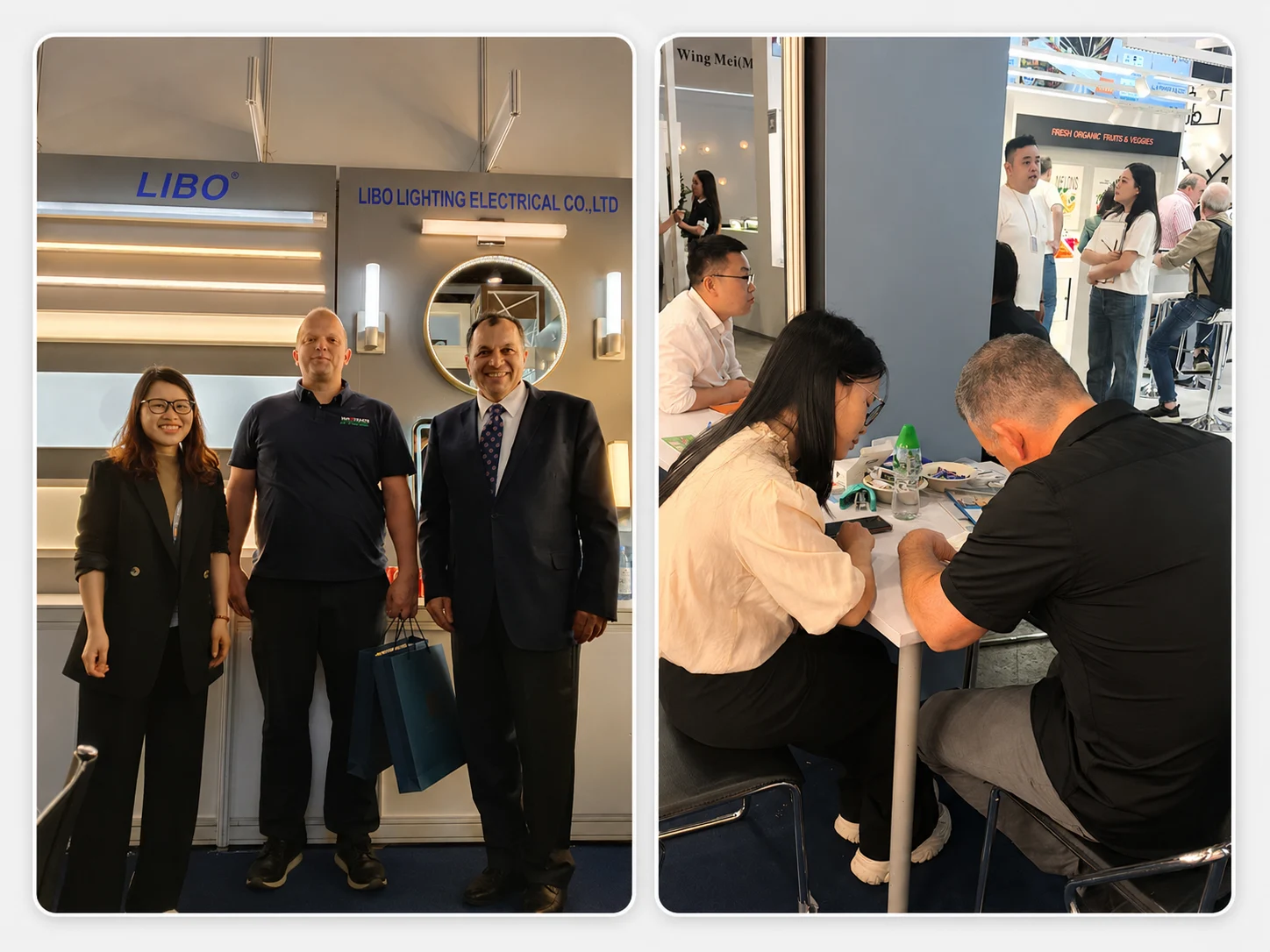
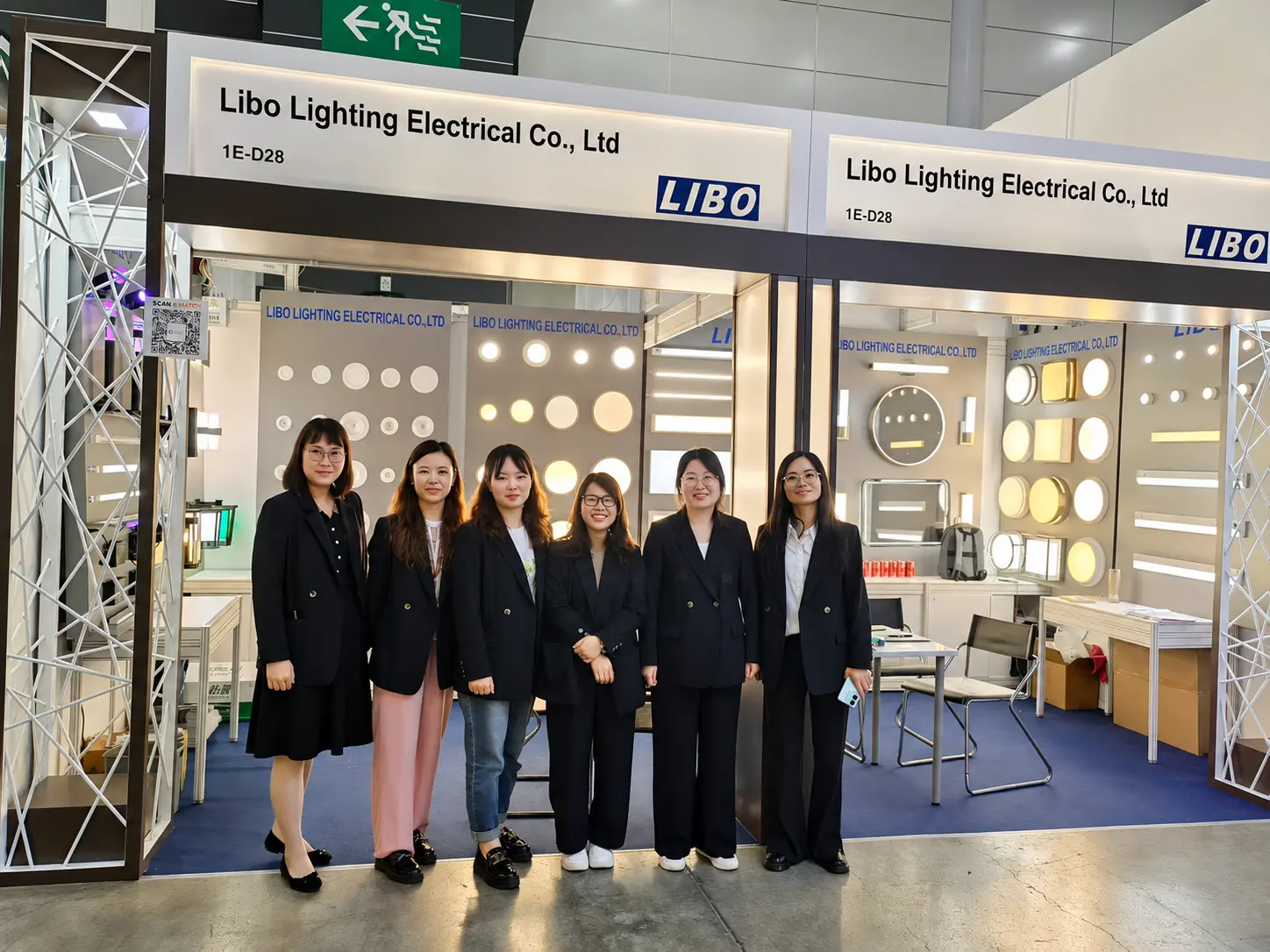
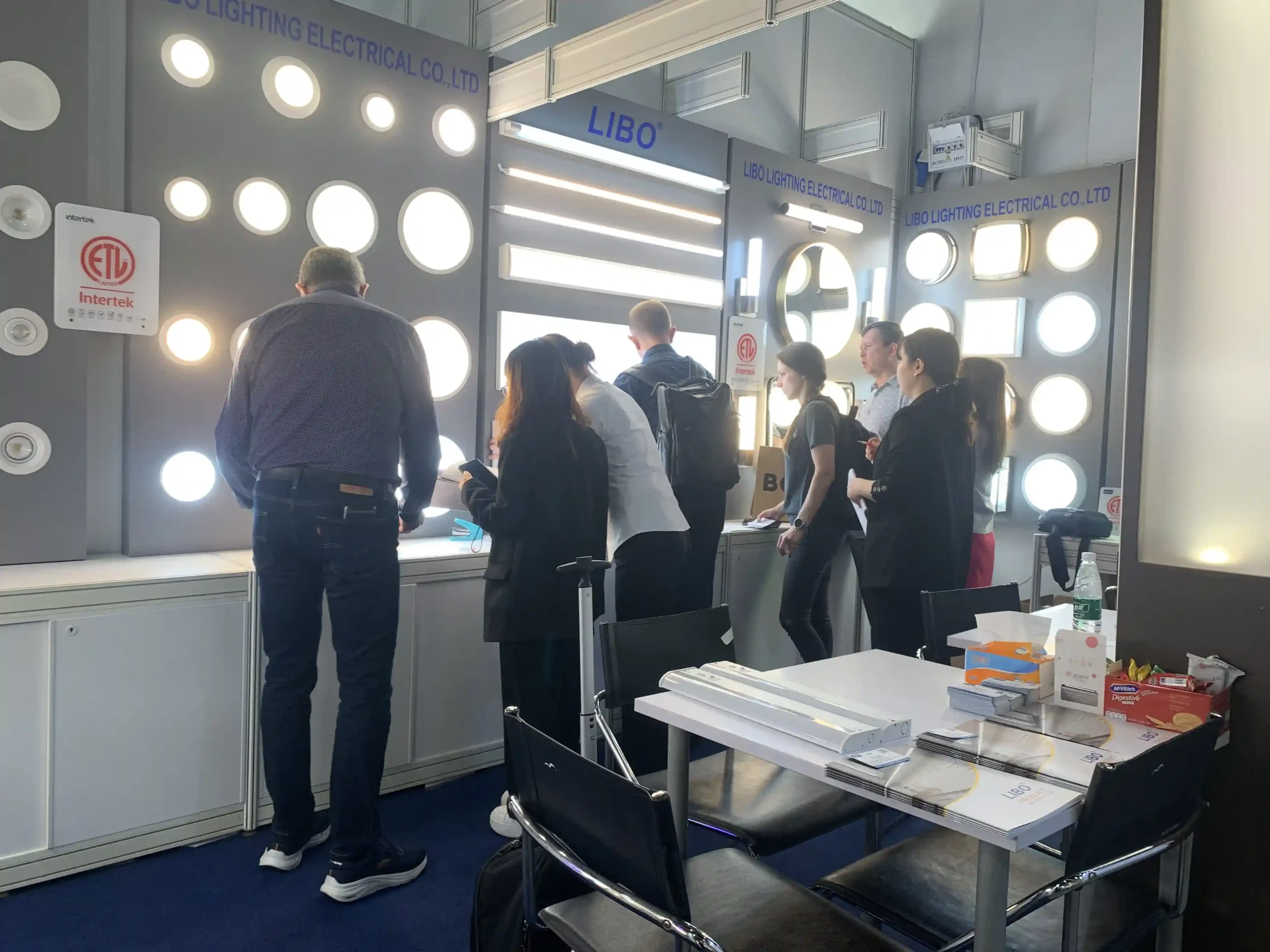
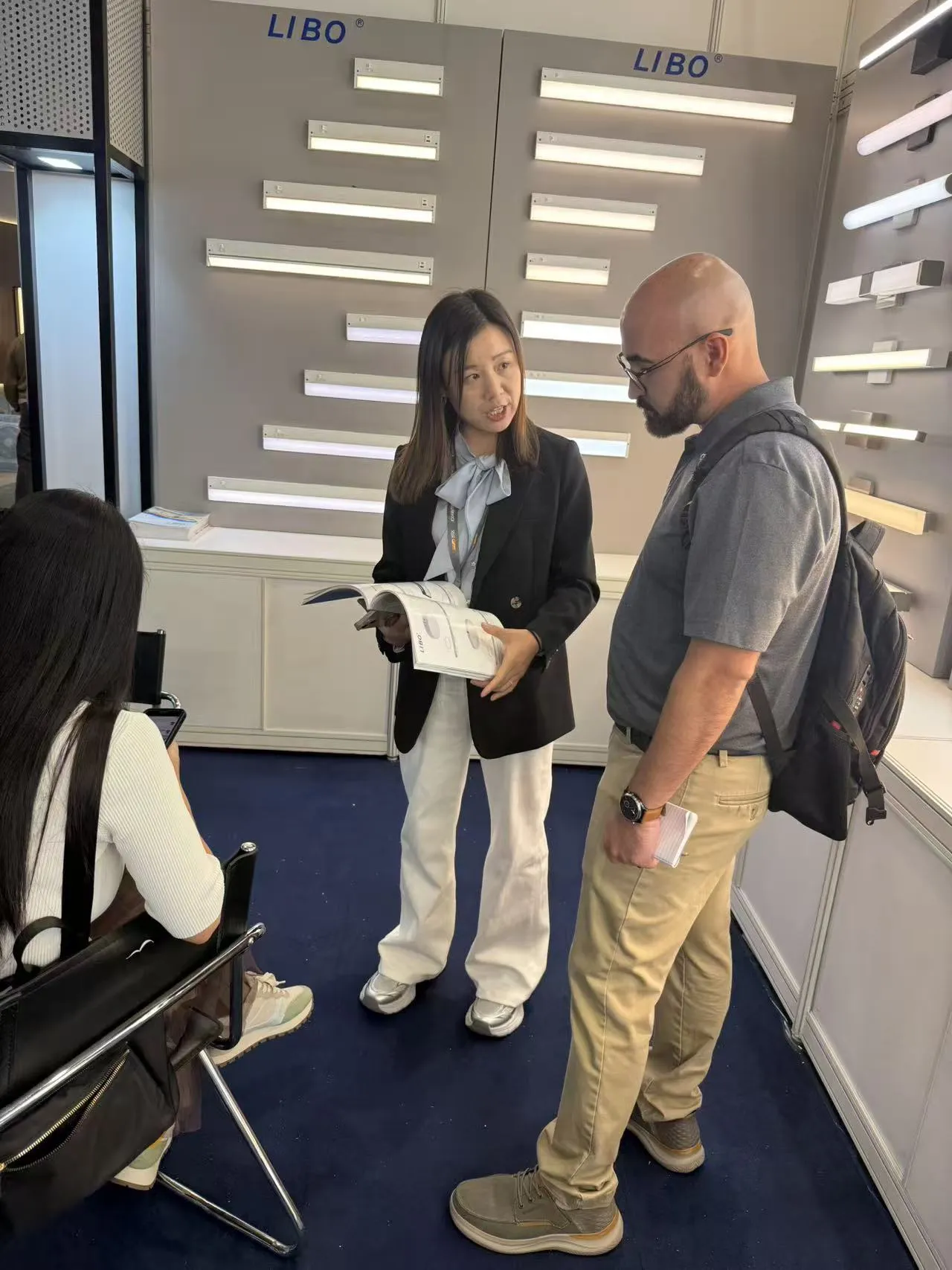
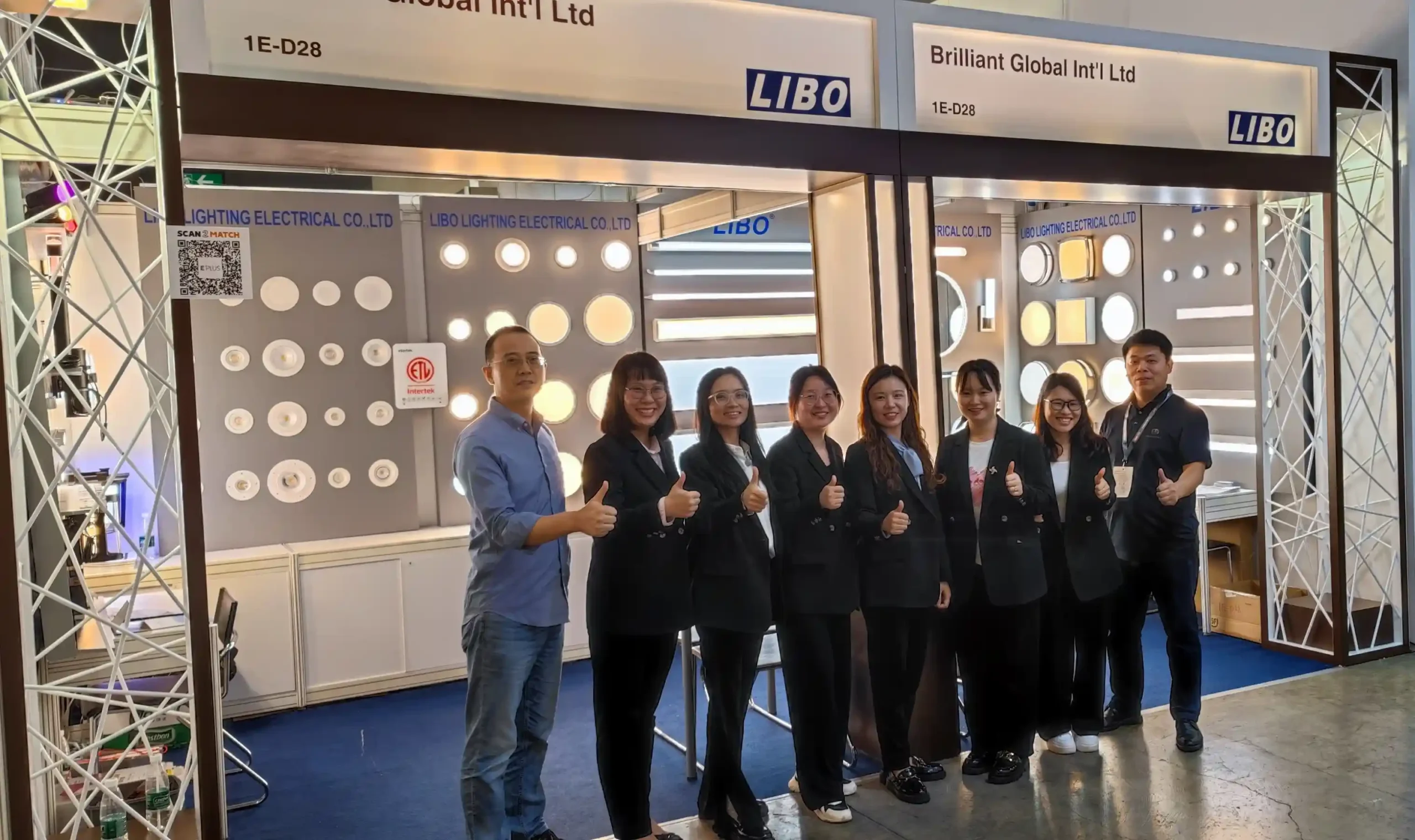
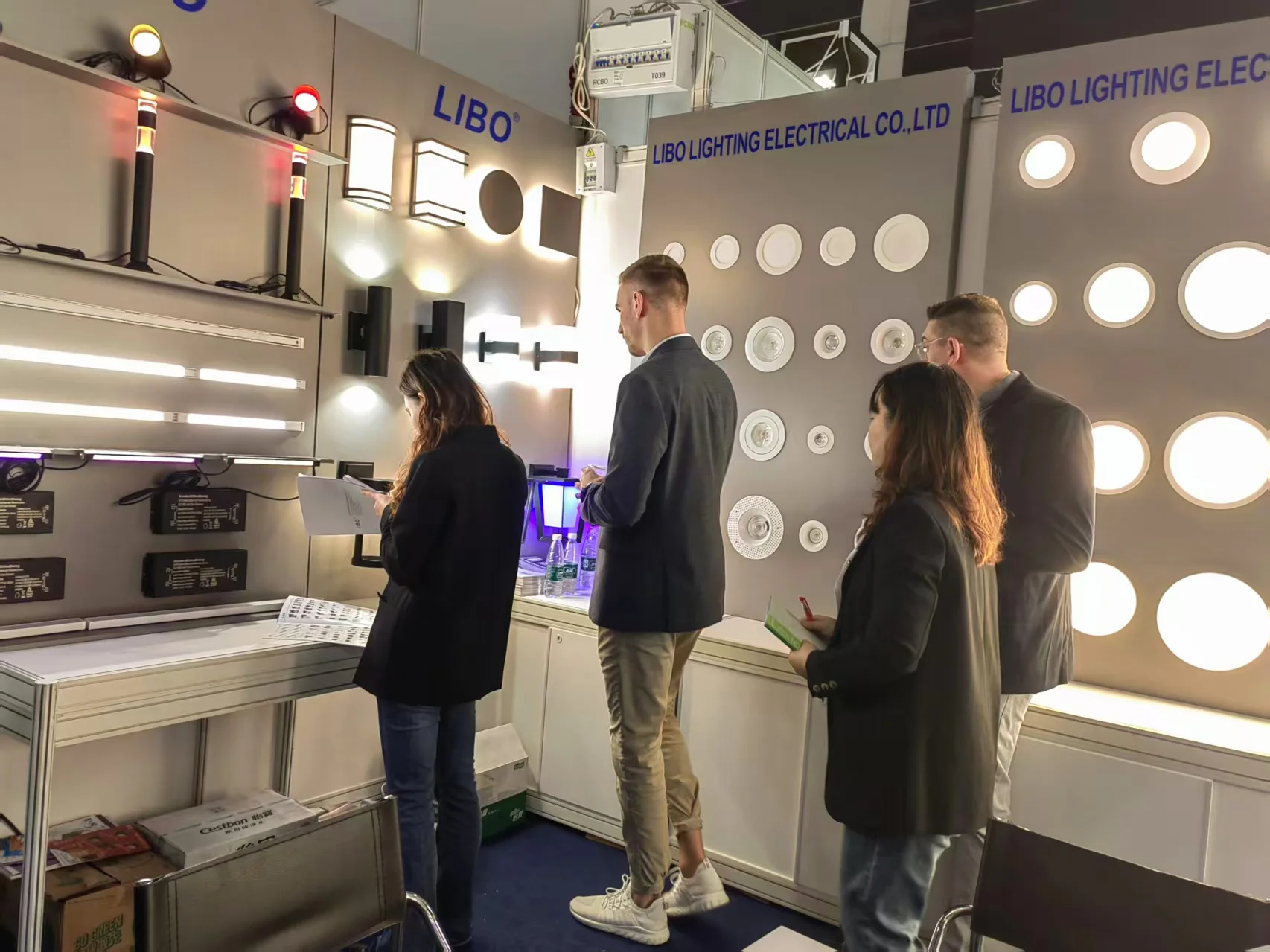
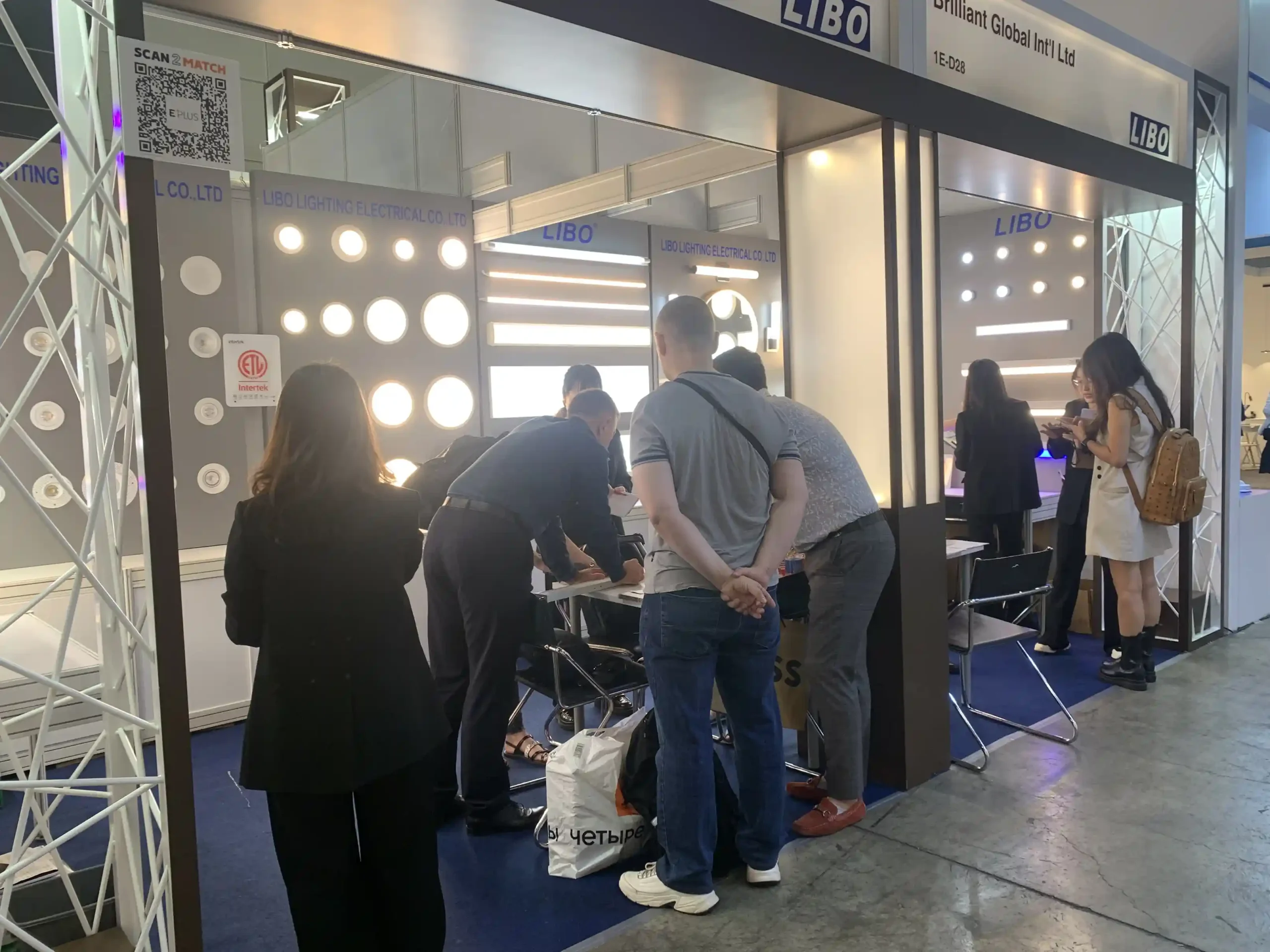
Meet the Team Behind Your Lighting Projects
Industry exhibitions allow buyers to physically inspect fixture construction, trim finish, optical appearance, and installation structures before committing to an order.
Related Lighting Solutions
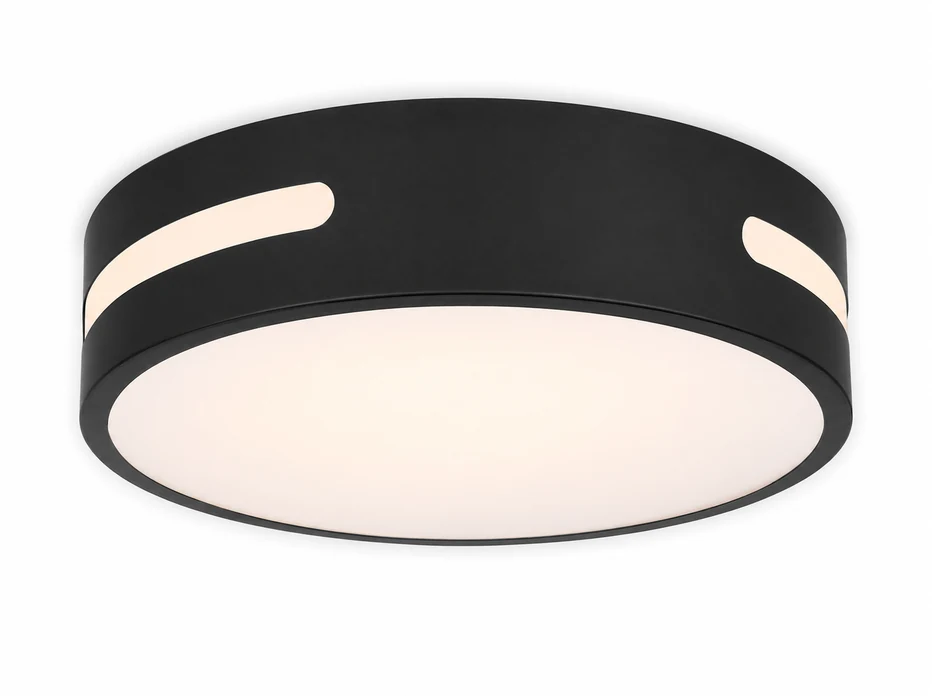
LED Ceiling Lights
General ambient lighting solutions for wider area illumination.
Explore Ceiling Lights →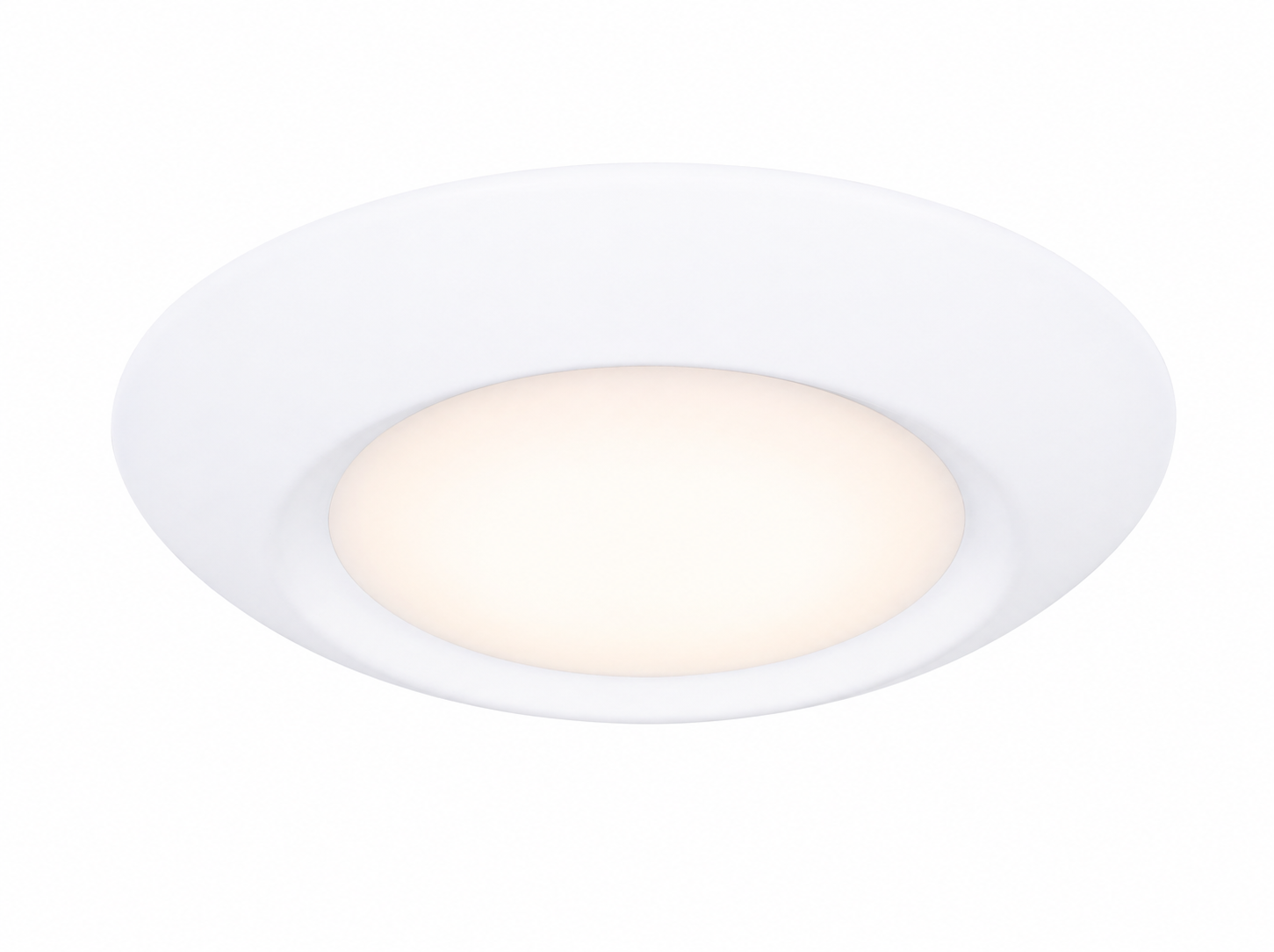
LED Flush Mount Lights
For ceiling projects where surface mounting is preferred over recessed installation.
Explore Flush Mounts →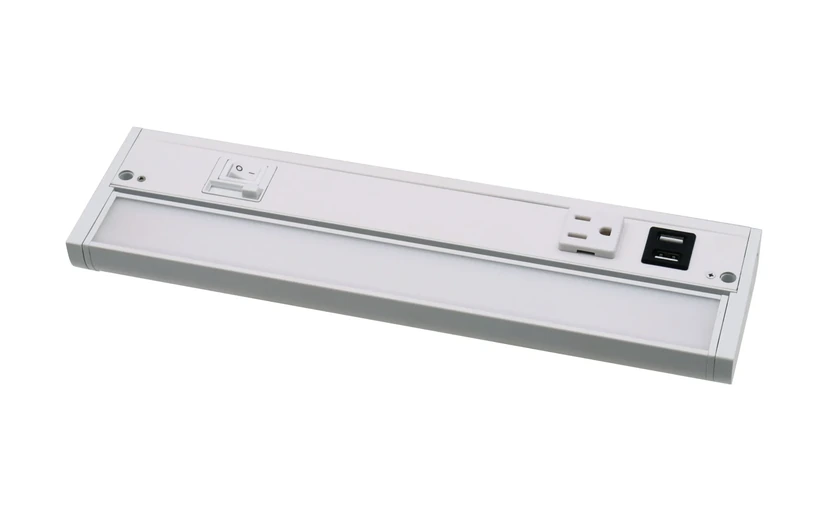
Residential Lighting
Lighting specified for homes, apartments, and multi-family developments.
View Residential →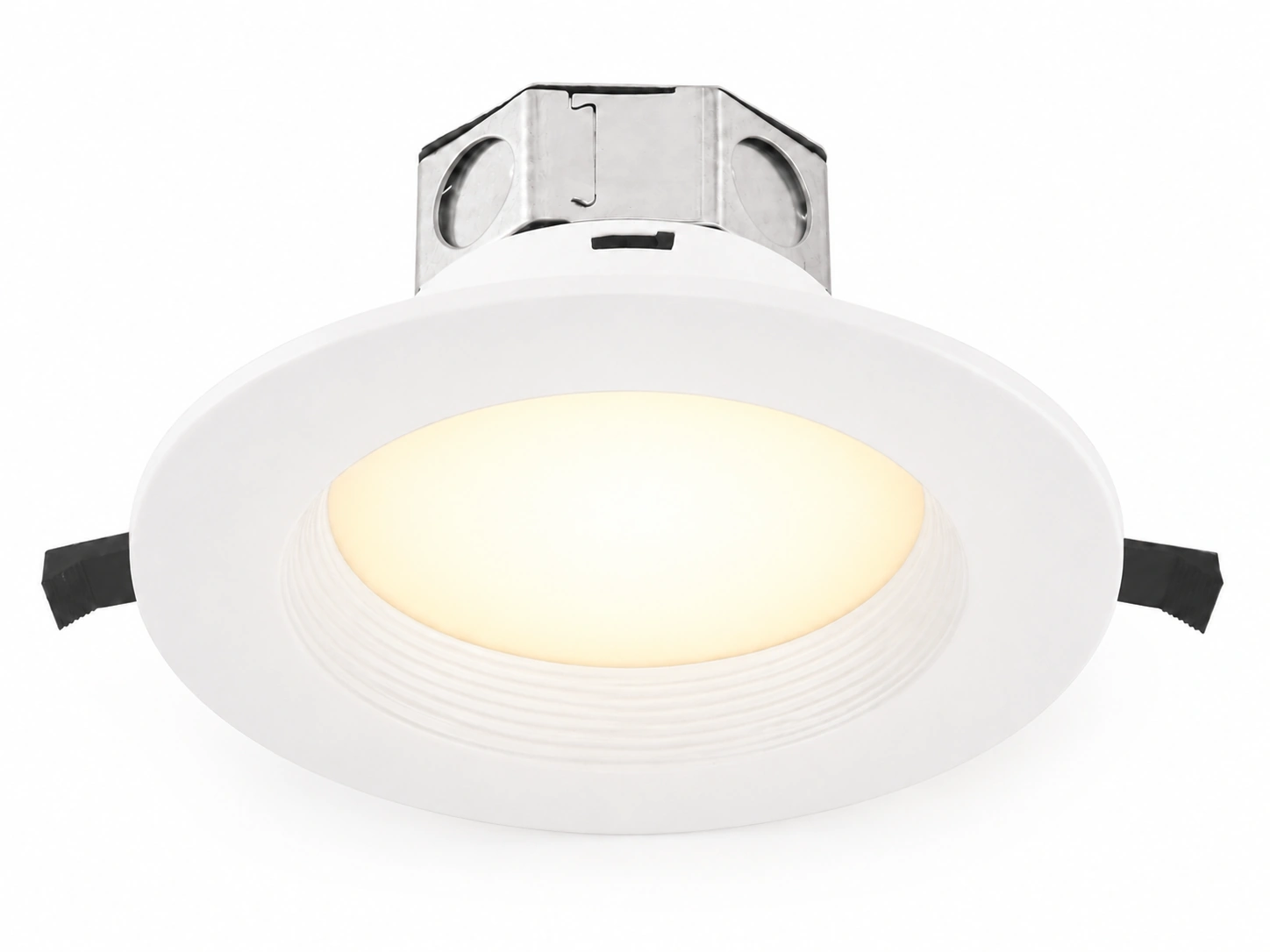
Commercial Lighting
Robust solutions for offices, hotels, retail spaces, and public buildings.
View Commercial →Frequently Asked Questions
What is the difference between a canless and retrofit LED downlight?
How do I choose the correct LED downlight cutout size?
Why use selectable-CCT LED downlights?
How can glare from an LED downlight be reduced?
What is a COB downlight?
When should I use an adjustable LED downlight?
Are LIBO LED downlights ETL certified?
Send the Ceiling Requirement Before You Finalize the Downlight
To ensure we quote the correct solution for your project or distribution program, please provide:
- Cutout size & ceiling depth
- Existing can or canless installation
- Wattage or lumen target
- CCT & CRI requirements
- Dimming & certification needs
- Estimated quantity
Already have a drawing, competitor sample or specification sheet? Attach it to your inquiry.